

Eat where you travel
Why local food matters on rural holidays
A countryside holiday rarely begins only at the accommodation. You notice that at the first shop.
There is bread from the village. Eggs from a nearby farm. Cheese from a small dairy. Apple juice with a place name on the label, not only a brand. Suddenly the region becomes more concrete. Not a view. Not a pretty backdrop. Something people grow, bake, press, milk, harvest, sell.
Many people travel to the countryside for calm, landscapes, real markets, good food, small places, a rhythm that does not keep demanding attention. Then comes a very practical moment: where do we buy food?
That question sounds small. It isn’t.
When every purchase ignores the region, the trip remains oddly outside the place. Convenient, of course. Sometimes understandable. Still, something gets missed. Shopping is one of the simplest ways to make contact with where you are.
The landscape does not live on admiration
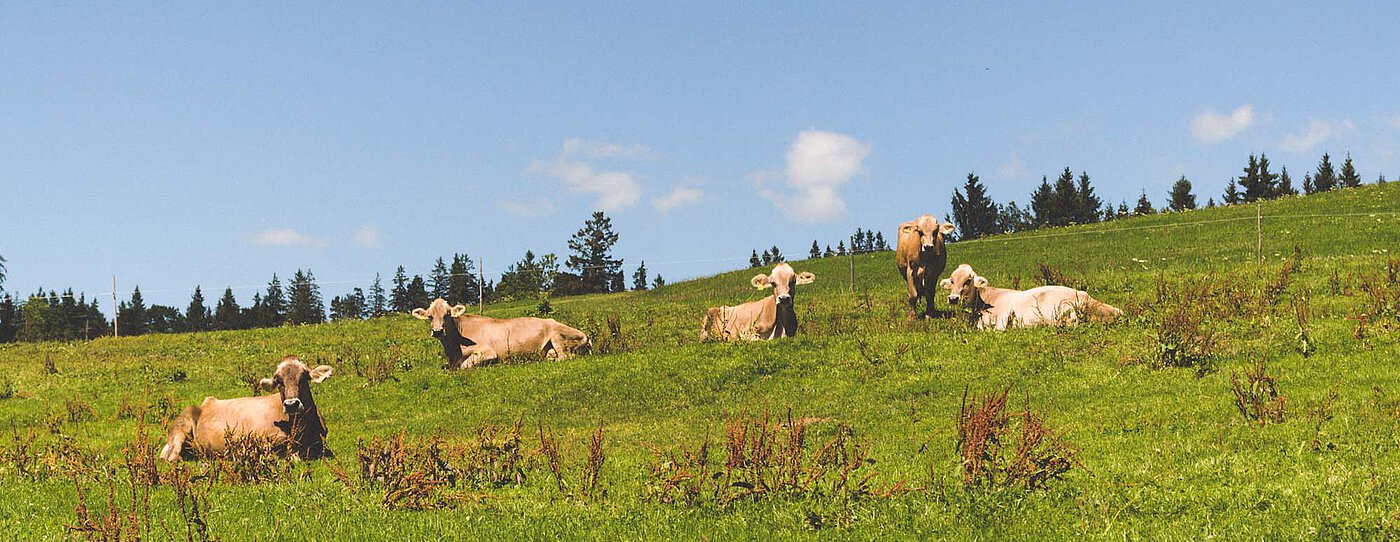
Most people love this rural image: cows in pasture, tractors working the fields, small farm shops by the road, fruit crates in front of a barn, a handwritten price sign. These details make countryside travel feel alive. They give a place its shape, its sound, its smell.
They do not stay there just because visitors find them beautiful.
Farmers, small producers, markets, bakeries, dairies, olive mills and village shops cannot keep performing the scenery of rural life if nobody buys from them. A countryside region does not live on admiration from a distance. It lives through demand, through people who take products with them, eat them, recommend them, return.
This is not a scolding. It is a plain fact. Anyone who wants to keep enjoying living rural landscapes in the future has to take their economic reality seriously too.
Buying local doesn’t make travel smaller
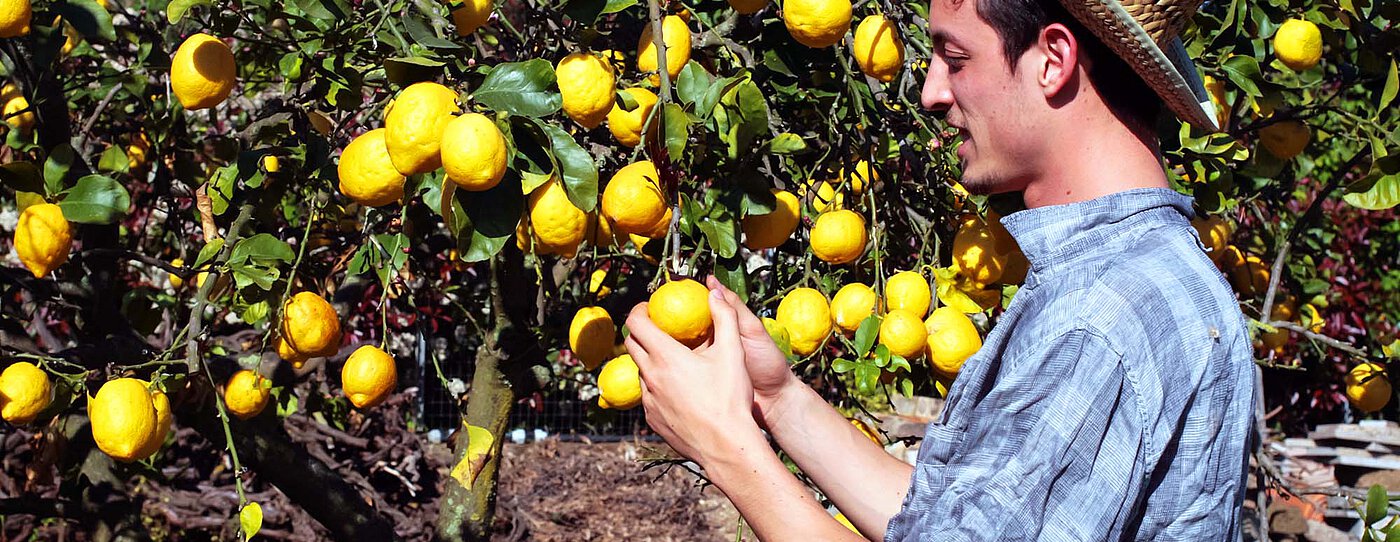
Supporting local products does not mean making the world smaller. Nobody needs to give up coffee, spices, olive oil, or Lemons. Europe lives through exchange. Travel does too.
Local food is not a holiday detail
A jar of honey from the next village can tell you more about a region than a brochure. The same goes for bread, cheese, olive oil, apples, eggs, potatoes, wine, tomatoes, herbs, or juice. These products carry climate, soil, season, and skill. You may not taste every layer consciously. But you notice when a meal is not interchangeable.
Local food is not a nice extra. It is part of the region. When you buy it, you are not only paying for a product. Some of that money stays where landscapes are maintained, animals are cared for, fields are worked, and small businesses can keep going.
A Joint Research Centre report from the European Commission describes short food supply chains as systems with social, economic, and environmental effects at regional and farm level. These include farm sales, markets, direct sales, and other channels that keep producers and consumers closer together.
On holiday, this looks less technical. You buy cheese where it is made. You get bread from a bakery that still bakes. You ask your host which market is worth it. Afterwards, the place feels different. Not fully understood. More readable.
Buying local doesn’t make travel smaller
Supporting local products does not mean making the world smaller. Nobody needs to give up coffee, spices, olive oil, or Lemons. Europe lives through exchange. Travel does too.
The point sits elsewhere. When something grows well or is made well nearby, it should not become invisible.
In Italy or Greece, olive oil belongs to many landscapes. In the Alps, milk, cheese, and butter shape entire regions. In South Tyrol, apples say a lot about climate, labour, and agricultural culture. In Provence, herbs, markets, and small producers lead straight into everyday life. In Istria, olive oil, wine, truffles, and small markets often sit close together. In Portugal, simple bread with oil and cheese can explain a place with surprising accuracy.
This is not a romantic side note. It matters economically and culturally. The FAO describes short food supply chains as part of alternative networks to the globalised agri-food model, because they reconnect producers and consumers more directly.
A sober correction belongs here too: local is not automatically better. A scientific review of local food systems found that social, economic, and environmental effects depend strongly on product type, country, supply chain, and production method.
For travellers, that makes the rule practical rather than ideological: check origin, think seasonally, ask questions. A local label alone is not enough. A clear place, a traceable producer, and a product that belongs to the season are a better start.
The landscape does not live on admiration
Most people love this rural image: cows in pasture, tractors working the fields, small farm shops by the road, fruit crates in front of a barn, a handwritten price sign. They do not stay there just because visitors find them beautiful.
What changes when you buy locally on holiday
Buying from small producers changes the way you look at a place. Not dramatically. Practically.
You see what is actually available. Not what should be available everywhere all year. Strawberries when strawberries have their time. Cheese connected to a mountain pasture. Olive oil from a landscape where olive trees are not decoration. Wine whose story does not begin at a supermarket shelf. Potatoes, eggs, bread, vegetables, juice. Ordinary things, without much theatre.
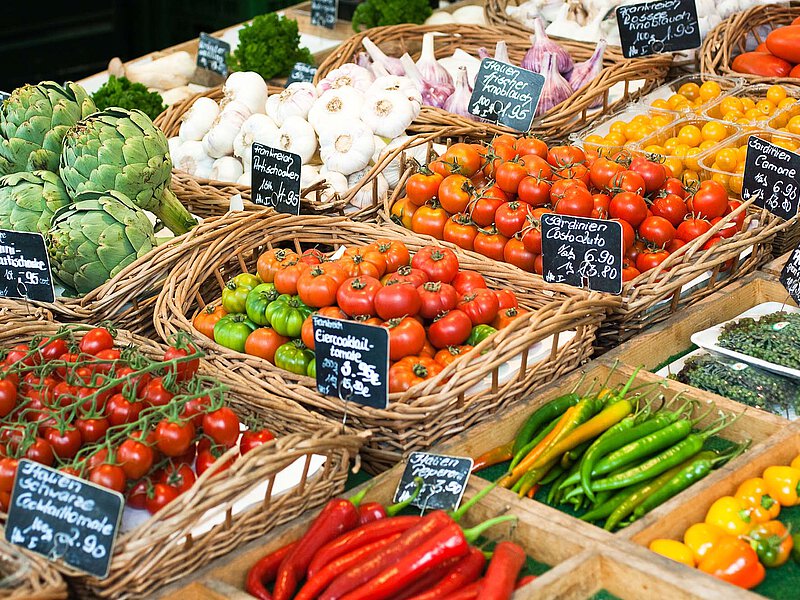
A market does the same. You go there, buy something, hear conversations, read names, see hands, crates, knives, scales, old delivery vans. Small details. For a countryside holiday, they matter.
The region stops being scenery. It becomes readable.
Where to buy local food on a rural holiday
The best places are not always the ones listed first online. Many are found by asking.
A market stall, a small dairy, an olive mill, a winery, an orchard: these are not side scenes of a rural holiday. They are often the moment when a region stops being landscape and becomes concrete.
Farm shops can be one direct way in, although Farmtravel does not think only in classic farm stays. Some sell their own produce, others also offer goods from neighbouring producers. Weekly markets show what a region actually wants to eat right now. Small bakeries reveal a lot about daily life. Cheese dairies, olive mills, wineries, orchards, beekeepers, vegetable farms, and cooperatives say even more if you give them a few minutes.
Vending machines now belong to this world too. Milk vending machines, egg machines, regional product machines. Not especially poetic, sometimes clumsy on the first try. That is part of their credibility. This is not holiday staging. It is supply.
A good countryside host can save you a lot of guessing. Hosts often know where the real products are. Not necessarily the famous addresses. More often the bakery where you should arrive before ten. The market stall with the better tomatoes. The small dairy that sells only twice a week.
Questions that open a place
The best questions are usually simple.
- What is in season right now?
- Which market is small but good?
- Are there producers who sell directly?
- What do people here actually buy themselves?
- Which local product is easy to miss?
- What would you take home for a simple dinner from the region?
Questions like these change a trip faster than a list of sights. The place gains names. People. Routes. Opening hours. Smells. Simple things that stay.
Short food supply chains do more than reduce distance. They bring producers and travellers closer together – and make visible how food connects to landscape, work and regional value.
Source: Galli & Brunori (eds.), FOODLINKS Evidence Document, 2013.
A European view of local food
Farmtravel looks at countryside holidays across Europe. That matters here, because there is no single rural food culture.
In Tuscany, a stay can become concrete through olive oil, bread, and wine. In Andalusia through oranges, almonds, olives, and markets. In Alentejo through bread, wine, cheese, and wide agricultural landscapes. In Slovenia through honey, dairy, and mountain regions. In France through markets, small producers, cheese, walnuts, herbs, or wine. In Austria, Switzerland, and South Tyrol, often through milk, butter, cheese, apples, bread, and simple products that seem modest at first and stay in your head later.
No need to turn it into a programme. One local shop can be enough. One dinner on the terrace. Bread, cheese, tomatoes, juice, a glass of wine, oil, fruit. Not a perfect menu. Just a table that has something to do with the landscape outside.
How we see it at Farmtravel
A countryside holiday should not only show you a region. It should bring you closer to it.
That sounds simple. We take it seriously. Rural areas do not live from beautiful images alone. They depend on farms, producers, markets, kitchens, seasons, and people who can keep making and selling things. When guests use these structures, the journey changes.
Nothing heavy. Nothing moralising. More concrete.
At Farmtravel, we do not see rural stays as a stage for calm. A good stay helps people understand where they are. Food is often the easiest way in. No big theory needed. Buy, taste, ask, cook. The rest follows.
Take the region with you as more than a view
This does not need to become a rule. No shopping list. No pressure to get everything right.
It is enough to think differently at one point on the next countryside trip: not only where to sleep well, but where the place shows itself. In bread. In cheese. In oil. At a market. In a glass of juice that tastes less like a brand and more like a region.
Travel does not become heavier that way. It becomes more awake.
A region then stays with you as more than a house you liked or a view you photographed. It gains names, products, routes, people. Sometimes that is what remains longer than any picture.
Frequently asked questions
Local food makes a place more concrete. Bread from a village bakery, cheese from a small dairy or juice from a nearby orchard can say more about a region than a view alone. It also keeps part of your travel spending close to the people who grow, make and sell there.
Not always. Season, production method, transport, storage and origin all matter. Local food becomes a stronger choice when it is seasonal, traceable and clearly connected to the place you are visiting.
Useful places include weekly markets, small bakeries, farm shops, cheese dairies, olive mills, wineries, orchards, beekeepers, vegetable farms, cooperatives and regional vending machines. The best lead is often your host’s answer to one simple question: where do people here actually shop?
Ask what is in season, which market is worth visiting, who sells directly, which local product is easy to miss, and what they would buy for a simple dinner from the region. These questions turn a stay into something more connected.
Farmtravel is about rural stays that bring travellers closer to a region. Buying local food helps that happen in a simple way: the place gains taste, names, routes and people. A countryside holiday becomes less like a view from outside and more like a short participation in local life.
More inspirations
Why hugging a tree belongs in a countryside holiday
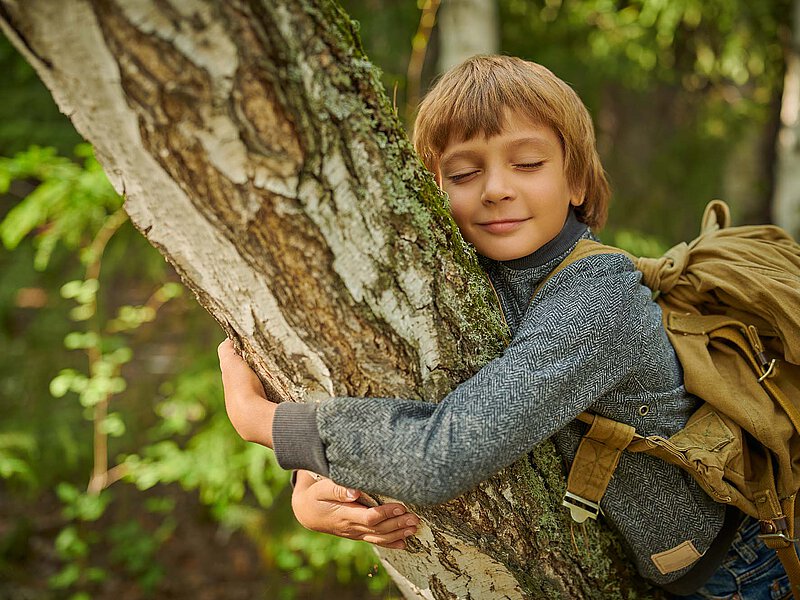
Most of us spend our days touching glass, screens and polished surfaces. A countryside holiday changes that quietly: bark, soil, grass, stone, rain,…
Eat where you travel: why local food matters on rural holidays
Many people travel to the countryside for calm, landscapes, real markets, good food, small places, a rhythm that does not keep demanding attention.…
Countryside Holidays: What Kind of Stay Actually Fits?
A search for countryside holidays rarely means “just somewhere rural”. Underneath it there is usually something more specific: good walking, proper…