


The Olive Isn’t a Snack. It’s a Place.
How Fair, Organic Groves Lead to Better Travel
This piece is for people who care about good food and prefer “real” over polished. It’s about olives in Mediterranean Europe — not just the coast, but the inland landscapes where groves set the rhythm of daily life.
We’ll look at organic olives, hand-harvesting, fermentation, and what “fair” can mean in practice — and, importantly, how you can recognise all of this on the ground without turning your holiday into a lecture. It’s a year-round topic, but autumn/winter (harvest) and spring (pruning, new growth) feel especially telling. Olives are more than a jar on a shelf: they carry stories about land, water, work.
If you want a quick picture in your head: Puglia in Italy, with ancient trees, red soil, and small “masserie” — in the evening, bread, olive oil, salt, done. Andalusia in Spain, where groves seem endless and villages move on their own clock, as if olive oil is a kind of everyday grammar. The Peloponnese in Greece: dry hills, wind, goats, and olives in brine that taste straightforward and bold. And Alentejo in Portugal, with big horizons, cork oaks, and olives that take their time — and quietly teach you to do the same.
A small fruit with a big backstory
Most people meet olives in a jar. Quick snack, done. Then you sit somewhere in rural Mediterranean Europe and a small bowl appears on the table — no explanation, no ceremony — and suddenly it’s obvious: this isn’t “one product”. It’s a whole language.
Salty, yes. But also bitter, bright, sometimes citrusy, sometimes almost nut-like. Some olives are outspoken. Others are quiet. And there are far more varieties than everyday shopping suggests. Not three. More like a thousand-plus, depending on how you count.
What olives tell you about a place
Variety is landscape
A cultivar that thrives in one valley may struggle ten kilometres away. Soil, wind, water, altitude — each grove is a negotiation with its environment. That’s why olives from Crete won’t taste like Tuscany, and why Istria feels different again. Not “better vs worse”. Place is doing the writing.
In Italy, Tuscany and Liguria are two olive-oil worlds worth tasting side by side: Tuscany often feels more herbal and peppery, while Liguria tends to stay softer, almost almond-like.
Which is also why travel makes sense here.
To understand olives, you don’t need a factory tour. You need the countryside.
Hand-harvest: slower, not romantic
Hand-picking sounds poetic. In practice, it’s work — steady, repetitive, physical. But it can matter: trees are often treated more gently, ground and surrounding life can benefit, and more value stays local because people are part of the process, not just machines.
Not every farm can do everything by hand. Fine.
What matters is the logic behind it: how do they harvest, and why that way?
Fairness is practical, or it’s just a label
“Fair” is a beautiful word. But in agriculture, fairness shows up in boring details: reliable purchasing, predictable prices, long-term relationships. Naturland describes measures such as prepayments and long-term contracts — important because they address a thing we rarely talk about when travelling: risk. Who carries it when weather turns? When harvest drops? When costs rise?
If you want to understand a region, ask about the last dry year.
Not as an accusation — just as curiosity. You’ll learn more than any brochure can tell you.
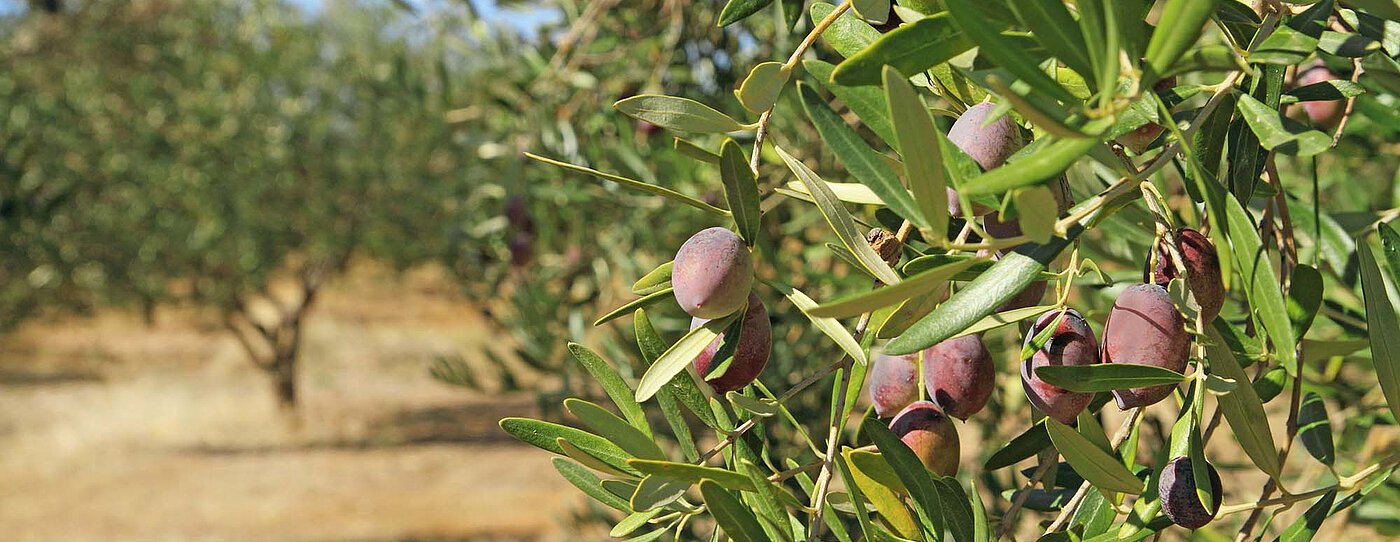
A small fruit with a big backstory
Some olives are outspoken. Others are quiet. And there are far more varieties than everyday shopping suggests.
Healthy, yes... but the deeper effect is slower
Olives and olive oil are associated with polyphenols, vitamin E, and unsaturated fats. That’s part of their appeal. But for many travellers, the more noticeable effect is different: olives pull you into slower time.
Fermentation takes patience. Grove care takes repetition. Trees are long-lived. Walk among them and the pace changes — almost against your will. Your phone becomes less urgent. Not because someone told you to “detox”. It just happens.
Fermentation: where flavour is made
Many people assume: green = unripe, black = ripe. Roughly true, but the real flavour often comes later — in brine, in time, in method. Every region has habits: salt levels, soaking times, small tweaks passed down without fuss.
If you’re tasting on the road, notice three things:
- texture: crisp vs soft (both can be right)
- bitterness: pleasant and herbal vs harsh and sharp
- aftertaste: clean and round vs metallic
No need to be an expert. Just pay attention. That’s enough.
"A good olive doesn’t only taste of salt. It tastes of the place it grew—and the time it was given."